Here I find out why the Gothic genre still haunts us today
Say the word “Gothic” to anyone and you’ll instantly conjure one of two images. Either they will picture someone black clad, hair, nails and lips the same colour and listening to The Cure; or they will imagine a monster, probably Dracula or Frankenstein’s creation. It is the latter of these images that I will focus on here.
Both Gothic literature and film are entering a renewed cycle of popularity. With a wave films such as Obsession and The Backrooms earning plaudits from critics, finding a huge following on social media and making massive profits on tiny budgets, I will explore what defines the genre that more and more people are being drawn to.
Ironically, the popularity of the Gothic is antithetical to its roots. The word “Gothic” stems from the Goths, a group of Germanic barbarians living on the edges of the Roman Empire who contributed to its eventual collapse. The Goths were outsiders, a foreign horde who threatened Roman dominance across Central and Eastern Europe. To this day the Gothic largely focuses on outsiders and the repressed.
The first Gothic novel, Horace Walpole’s The Castle of Otranto, created the blueprint for the genre by laying down a set of characteristics that would continue to define it for over two centuries. Many of these attributes can still be found in recent Gothic fiction. It is these enduring, defining traits that we discuss today.
Gothic narratives are often those of the repressed. In the genre works of the late eighteenth and early nineteenth centuries, the literature of the Gothic was concerned with stories and characters who represented peoples and cultures on the fringes of society. For a while, the Gothic was the genre of outcasts and the oppressed. It is no surprise that many of the early Gothicists were women. Anne Radcliffe, Jane Austen and, of course, Mary Shelley, were all writing in a genre where they could express fears and frustrations about anxieties ranging from motherhood to identity politics in a patriarchal world that often marginalised them. Victor Frankenstein’s monstrous creation is an apt example of the isolation – both physical and psychological – that Gothic protagonists and anti-heroes face. As the monster roams the villages and mountains of Europe, he is shunned, demonised and rejected wherever he goes, including by his own creator, who struggles to reconcile with his monstrous progeny.
These themes persist. One only has to look to novels of the last century, such as Ira Levin’s Rosemary’s Baby or Stephen King’s Carrie, to see that ideas of isolation and persecution are still relevant. Importantly, this theme has evolved with the times; films such as Jordan Peele’s Get Out or Jennifer Kent’s The Babadook have added a new dimension to these themes that progresses beyond gender conflicts and adds racial and cultural elements instead.
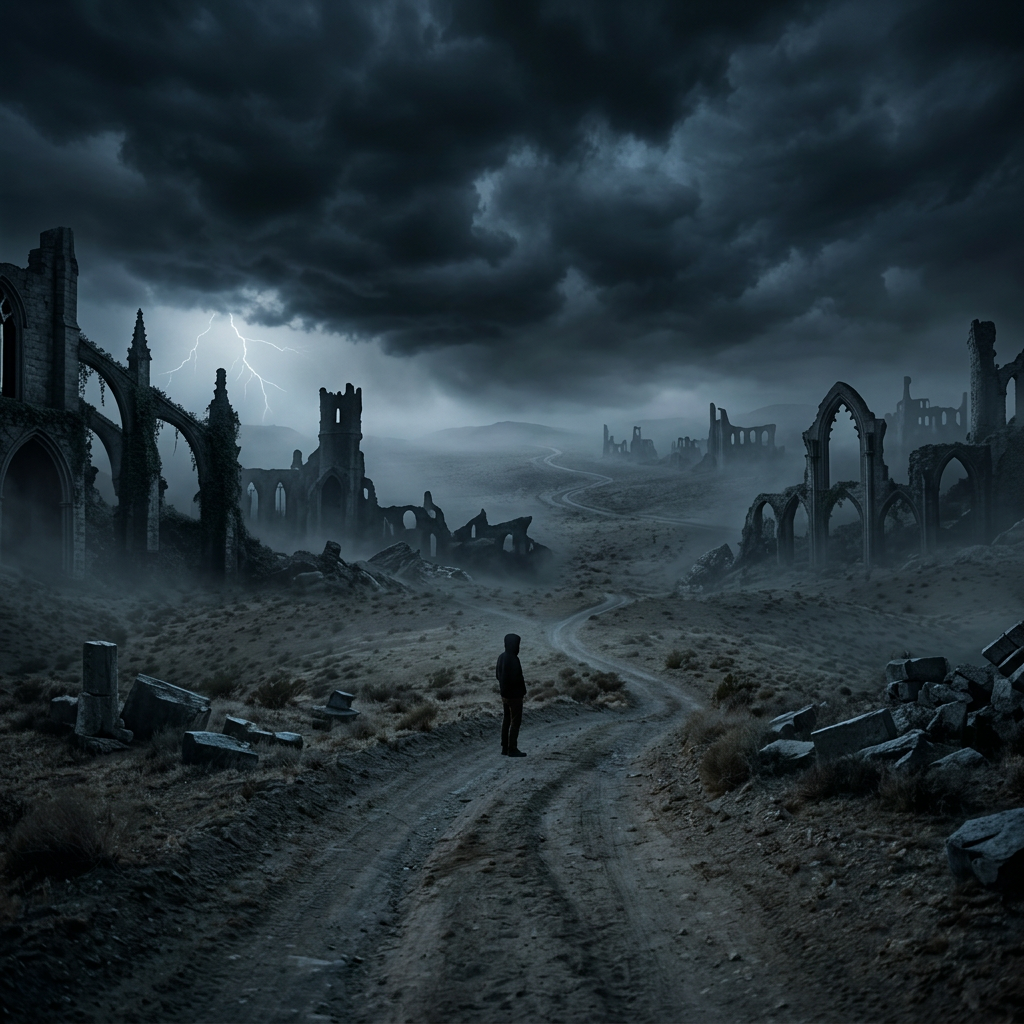
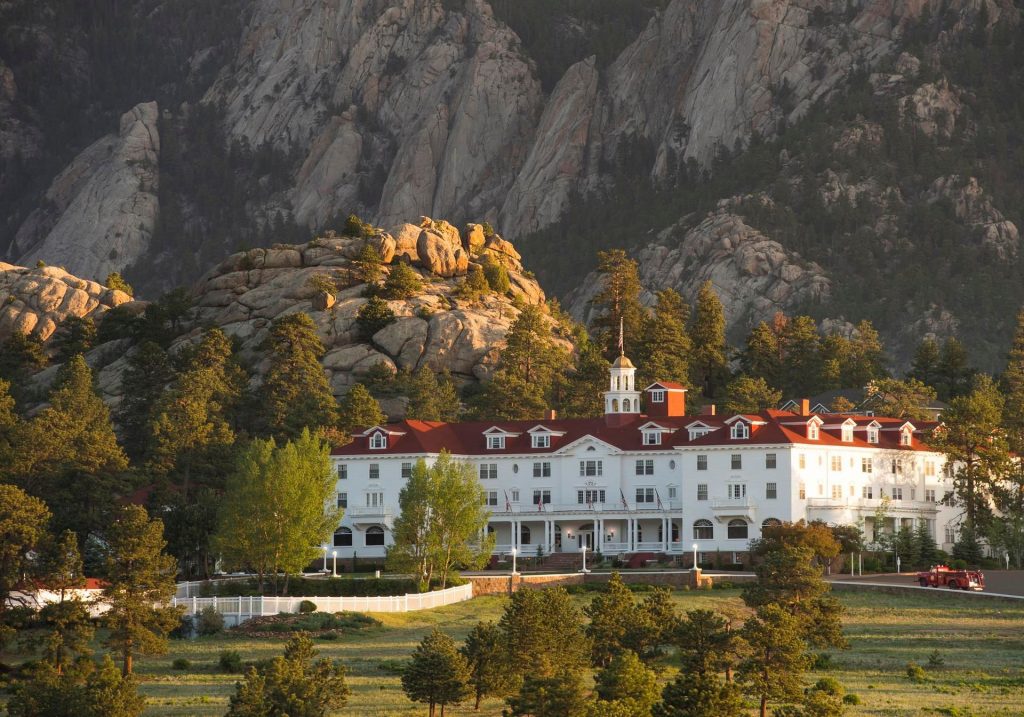
Moreover, the Gothic has always been characterised by a strong sense of place. Authors writing in the genre have been able to elicit such powerful feelings through the creation of some of fiction’s most memorable settings. Indeed, images of haunted castles, lonely moors or isolated motels on the back roads of America are all quintessentially Gothic. Think of Dracula’s castle, the boundless seas of Moby Dick or, more recently, the alpine trappings of The Shining. Often serving as a metaphor for alienation, Gothic settings are among some of the most iconic in fiction and can offer layers of subtext. Take The Shining, for instance, and the Overlook Hotel. Nestled in the Colorado Rockies, the hotel works on three different but connected levels. First of all, it is literally isolated, presenting danger for the inhabitants once winter snows cut off contact with the rest of the world; second, the isolation of the hotel symbolises the feelings of the characters as their secrets and fears set them at odds with one another; and finally, the hotel acts as a springboard for narrative action, with so much of what happens in the story resulting from the hotel and the secrets it passes on to the Torrance family.
Since the mid-twentieth century, the locations of Gothic narratives have undergone a dramatic shift. The haunting isolation of medieval Europe made way for more urban locations and horror in the city. Robert Bloch’s Psycho brought the horror next door, while the works of authors such as Stephen King and William Peter Blatty made the home just as dangerous as the wilderness; modern film franchises like Final Destination or the Scream series prove that horror is no longer consigned to the backwoods, either literally or figuratively. This change in setting is still important because it captures the profound sense of immediacy that we feel about danger in our society. Last century, serial killers brought forth the realisation that the home was no longer a safe space. Ed Gein, John Wayne Gacy and Jeffrey Dahmer committed atrocities in their homes and the homes of others, dissolving any sense of safety we felt from being in our own space. Now, post-9/11 anxieties extend this feeling to even more urban areas. The image of the New York skyline ablaze, the thought that the world’s foremost democracy and military power could be made so vulnerable, brought about a new wave of fear born from the realisation that the homeland wasn’t safe and that it wasn’t guaranteed that the state could protect its citizens.
Also central to many Gothic stories, both past and present, is the idea of doubling. The Gothic double is another persistent idea that can trace its roots back to the nineteenth century while still being popular with authors and filmmakers today. Robert Louis Stevenson’s novella The Strange Case of Dr Jekyll and Mr Hyde is often heralded as the archetypal Gothic double. Stevenson’s story of respectable scientist Henry Jekyll being transformed into the villainous Mr Hyde by a concoction of his own creation is legendary by now. Jekyll, a man well known in the scientific and social communities of London’s Soho district, struggles to balance his well-meaning intentions and established public image with the machinations and criminal intent of his darker half. This battle between good and evil can only end one way, and it is hardly surprising when readers learn that, in order to stop Mr Hyde, Dr Jekyll has had to sacrifice himself.
Stevenson’s story is also an early version of science fiction. Jekyll, a scientist, invents a potion that is able to bring about strength and confidence but at the cost of morality and decency. Like Frankenstein, it is a cautionary tale. What makes Stevenson’s work so timeless is its mutability; the fate of both Jekyll and Hyde can be read through the lens of many things, from scientific advancement to addiction. It is the mutability of Gothic doubles that has seen them continue to this day. Werewolves in cinema are examples of Gothic doubles, with the inner beast in man being perfectly captured by the image of a towering lycanthrope. However, nothing in the early twenty-first century comes close to encompassing the duality of man quite like the zombie.
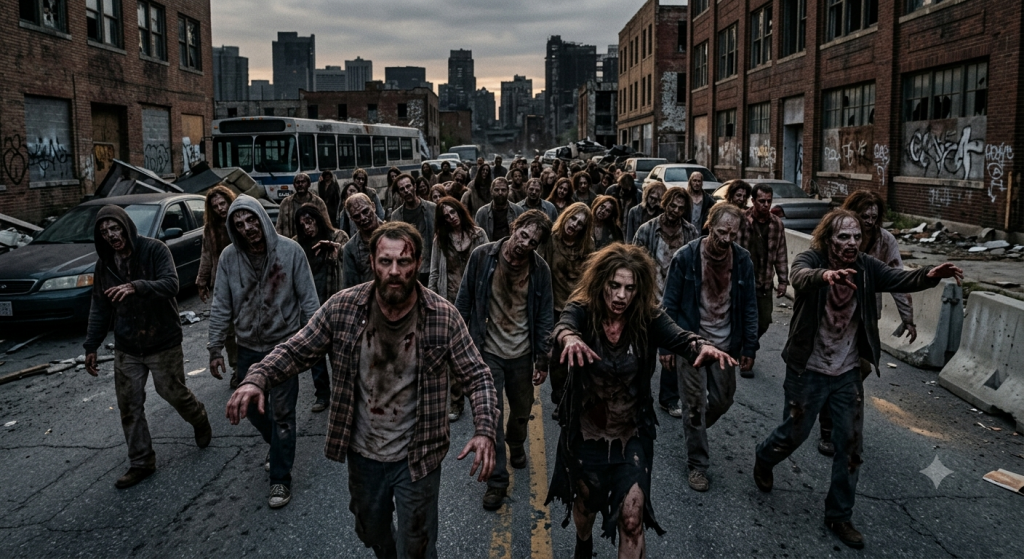
Zombies have conquered our imaginations. Starting with films in the 1930s and 40s that focused on the Haitian origins of the myth, they have slowly shambled their way into every corner of popular culture. Comics, video games, books and television shows are just a small number of mediums that have fallen victim to the undead. Zombies cannot be discussed without making mention of George A. Romero’s 1968 film Night of the Living Dead. Romero’s film firmly thrust the zombie into the spotlight of Western society, and it hasn’t moved since thanks to an endless horde of subsequent media. Zombies are popular because they are able to constantly reinvent themselves. However, one can trace their roots back to Gothic doubles of old because, like Mr Hyde, they make a perfect stand-in for the ills of humanity. Be it our insatiable appetite for consumer capitalism or our collective social rage, zombies horrify because they are us.
So far, the Gothic has been characterised by three things: the iconicity and importance of its settings, starting with the typical medieval and rural settings of the eighteenth and nineteenth centuries and moving onto more domesticated spaces today; the isolation felt by its characters as a means of expressing cultural, political, racial, gendered or religious repression; and finally, doubling. This is the phenomenon whereby authors are able to draw parallels between the insidiousness of their characters and the very real cultural ills of the time. The last of the Gothic archetypes I will be exploring today is another often found at the heart of many Gothic stories: the supernatural.
The supernatural in fiction predates the Gothic genre. Many of Shakespeare’s works (think Macbeth or A Midsummer Night’s Dream) contain supernatural forces, and works like Dante’s Inferno or Doctor Faustus prove that the supernatural and the Gothic are not mutually exclusive. However, the supernatural finds such a strong association with the genre because it is often at its heart. Early Gothic writers were focused on the sublime and uncanny; this fascination powered the Gothic imagination for over a century and gave readers and viewers some of the most recognisable characters in fiction. Dracula, the Wolf Man and an endless cast of ghosts and ghouls are just some of the supernatural beings that inhabit the genre. As I have mentioned, only relatively recently has the genre pivoted to human monsters, and for centuries readers were at the mercy of the imaginations of writers who were simply adapting or retelling European and American folklore.
This raises the question: why are supernatural forces so important to the Gothic stories we love? The answer is a fairly simple one that harkens back to the Germanic Goths of early history. The supernatural, like the Goths, represents the fear of foreign invasion. Vampires, spectres, werewolves, zombies or any other delightful monstrosity from the colourful cast of supernatural players in the Gothic canon are symbolic of external evil. Ghosts are the inescapable consequence of past trauma; Dracula is a literal immigrant seeking to create an empire of his own in Victorian London, while zombies are the antagonists who rise with such rapidity and vigorous determination that they cannot be negotiated with. They are symbolic terrorists, living lives totally different from ours and willing to die for what they desire.

So, there it is: four of the most fundamental elements of Gothic literature. What makes the genre so wonderful is that I have barely scratched the surface! From persecuted females to tyrannical fathers, there are so many more tropes that give Gothic stories their identity. If you liked this and want to know more, sound off in the comments for part two!